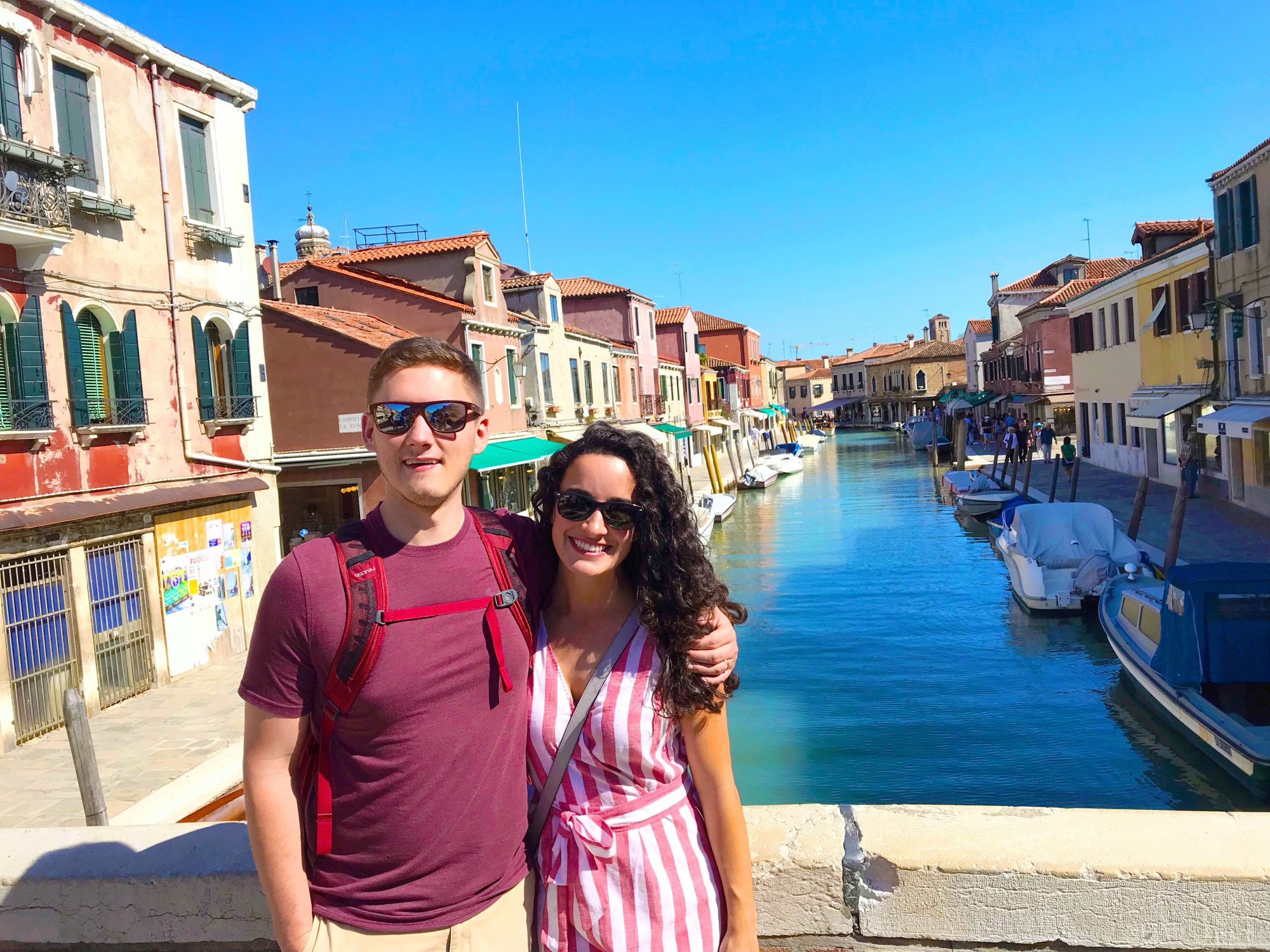
Getting to Murano
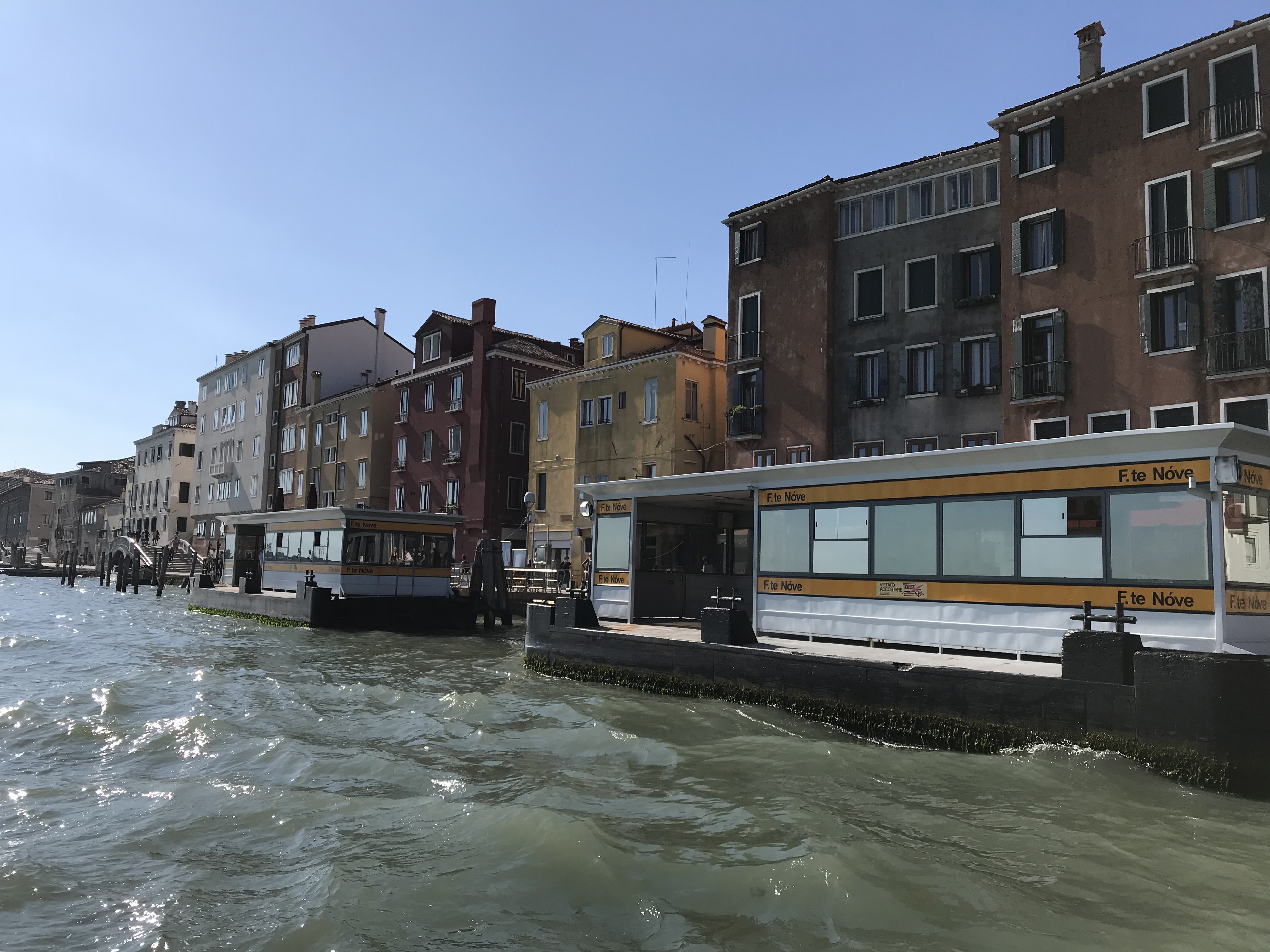
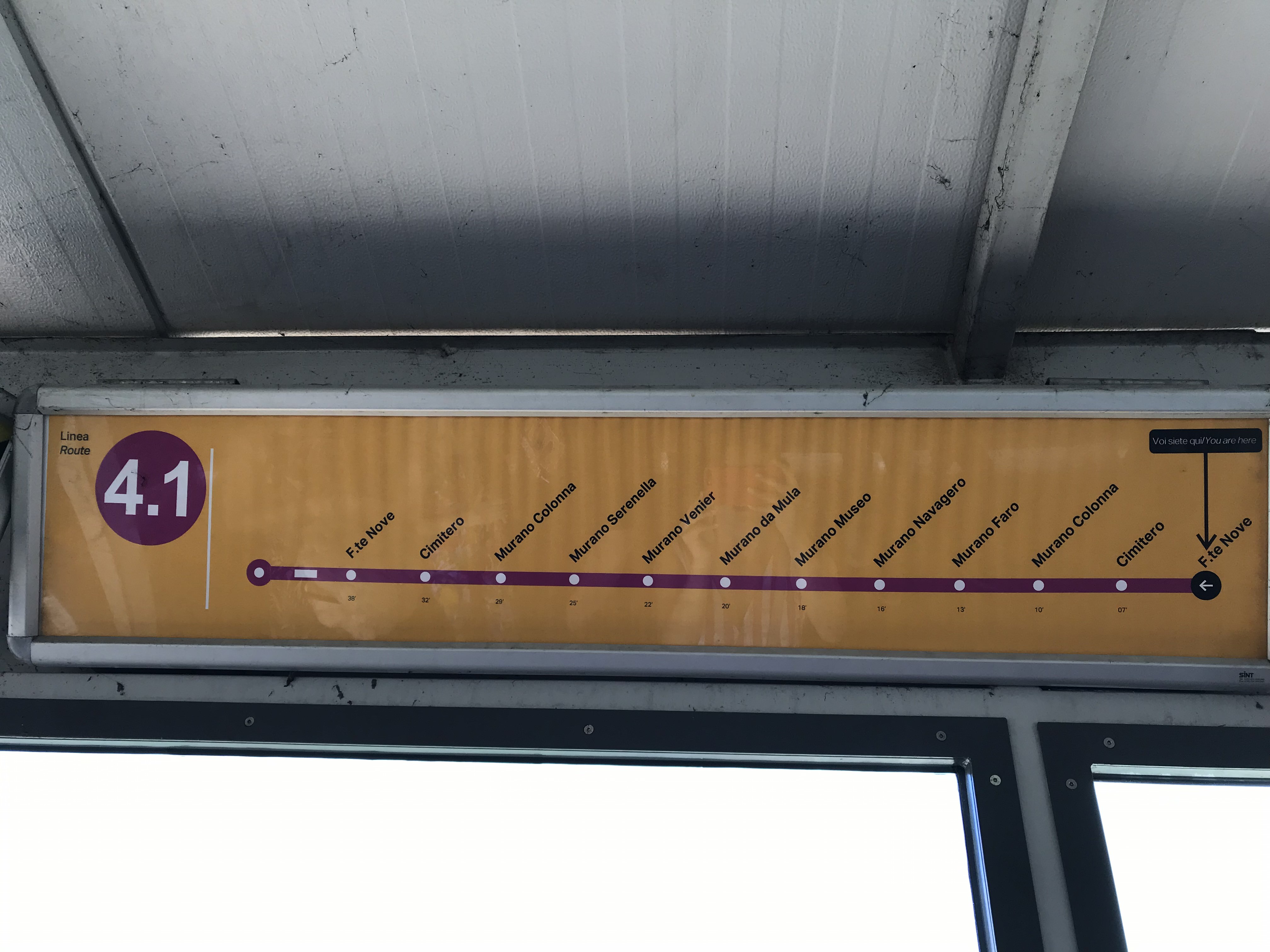
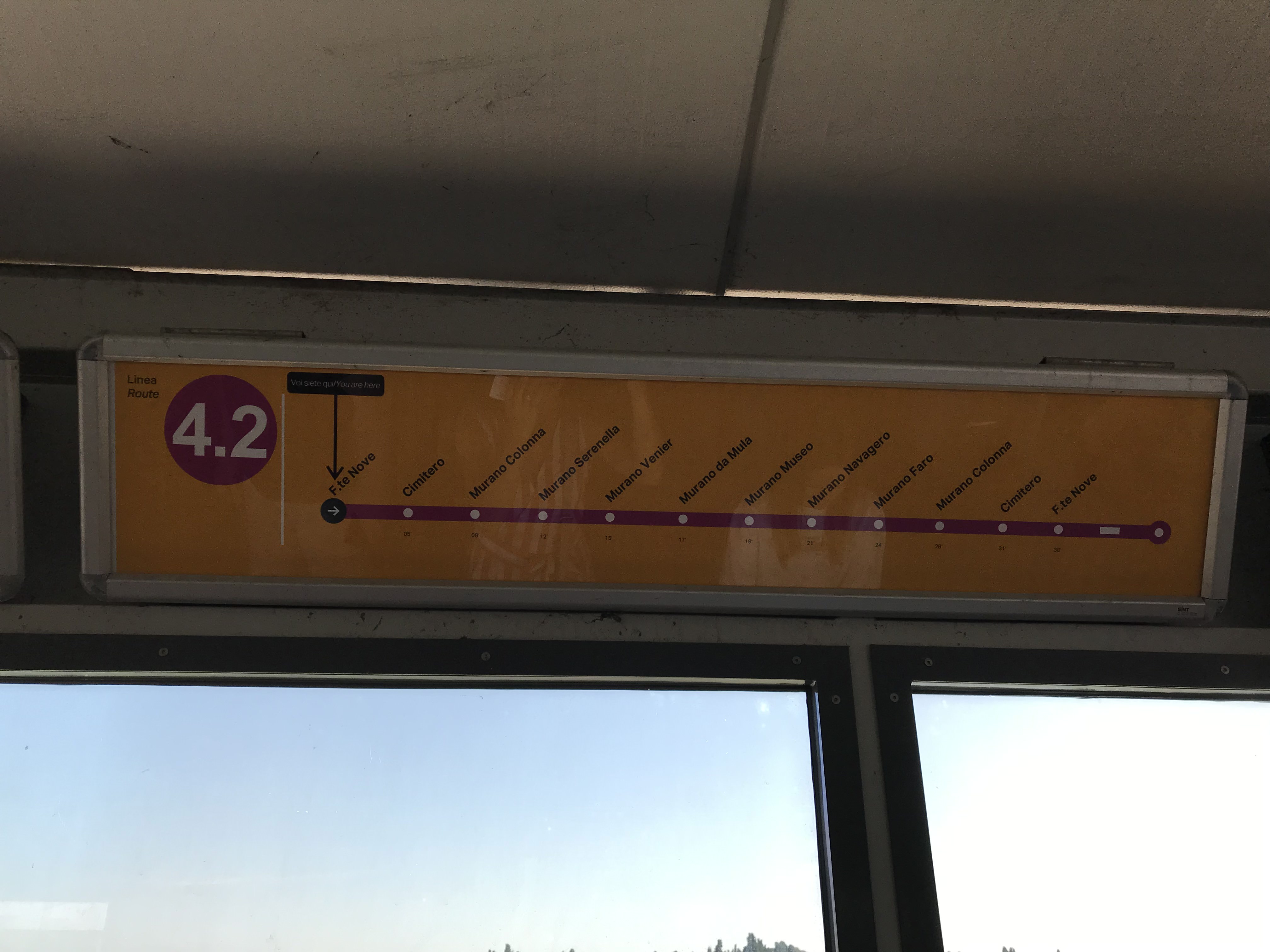
We walked from our Airbnb to F.te Nove B & C at the corner of Fondamente Nove & Calle de la Colombia to catch either the 4.1 or 4.2 Vaporetto (a commuter boat/ferry). We were able to buy tickets to the Vaporetto at a self serve kiosk or from a cashier before getting on the ferry.
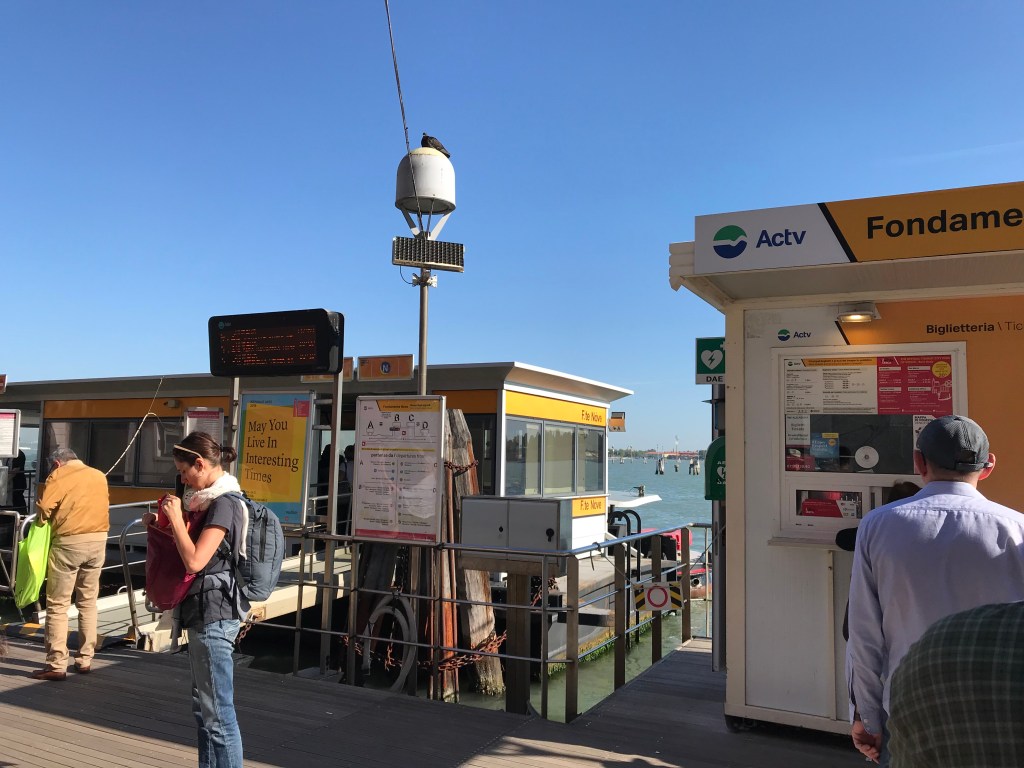
We paid €20 each for a day pass (you can use the same pass to ride a vaporetto down the Grand Canal!). We also decided to buy a day pass because the single use ticket was only good for 75 minutes, and we figured we’d be on Murano for a few hours. They say you can buy tickets aboard, but the drivers seemed annoyed when people tried to do that – if your ticket wasn’t validated, you could receive a fine. You could also buy the Venezia Unica Tourist Pass and add on an ACTV Travel Card for cheaper fares, but the cost of the pass didn’t make sense for the short time we’d spend in Venice.
Murano
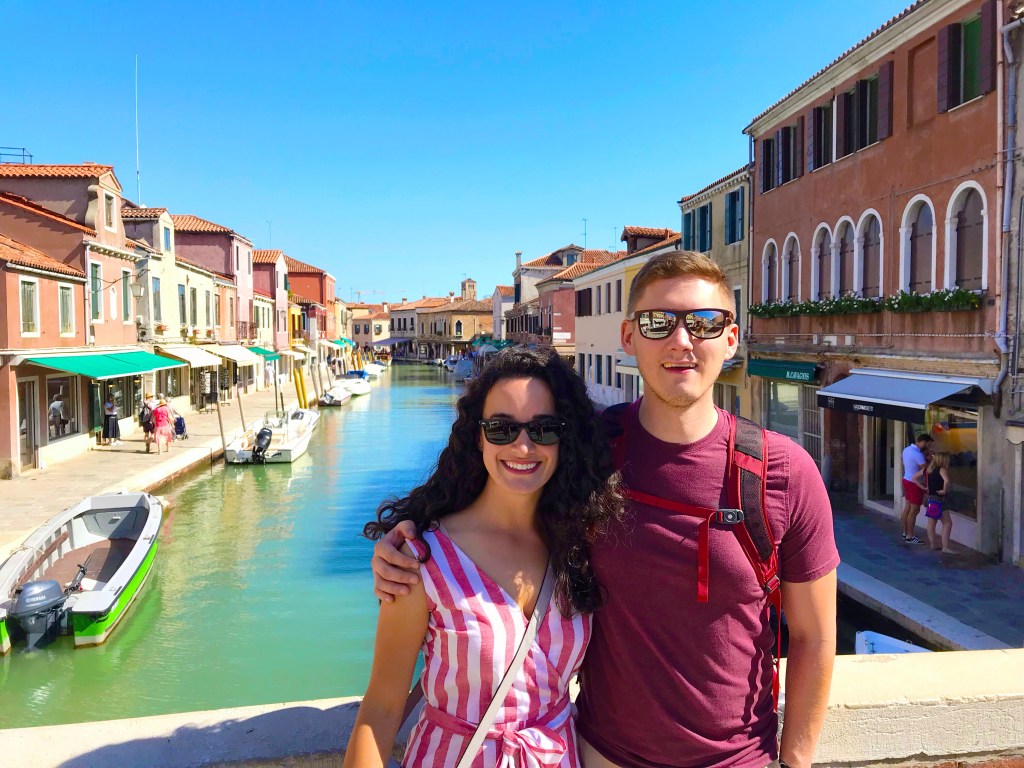
We got off the Vaporetto at Murano Colonna and walked around the island to the left where we stumbled across a number of glass making shops, including Guarnieri Vetreria Artistica where we saw a glass making demonstration and bought some glass with silver and blue.
Murano is famous for its Venetian glass. There are two type of shops on Murano – tourist shops and those attached to glass making shops. There’s no standard marking or sticker to identify true Murano glass – there’s a small consortium called Vetro Artistico Murano, but glass makers have to pay a fee to be a member, so even this isn’t the only identifying marker.
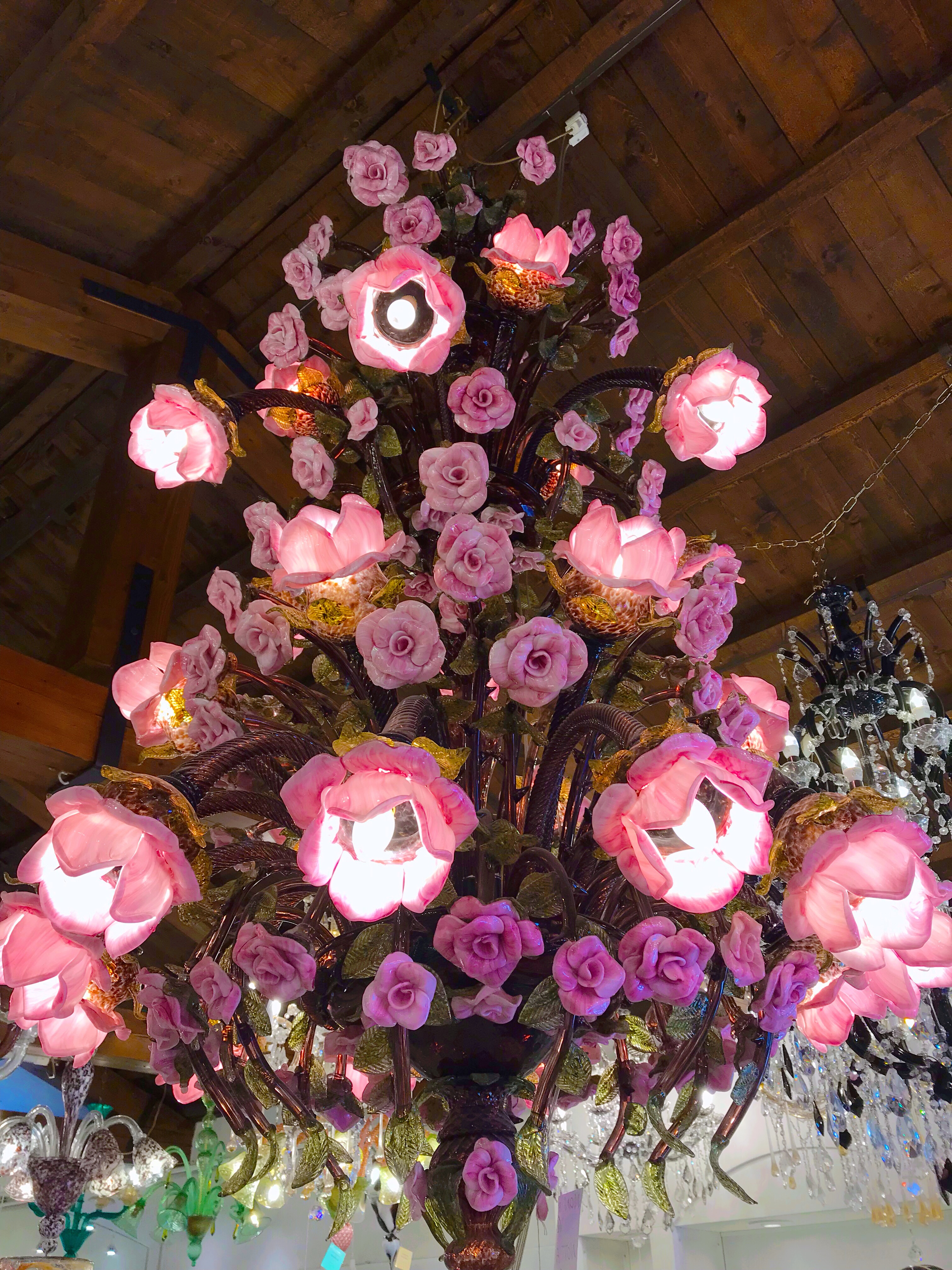
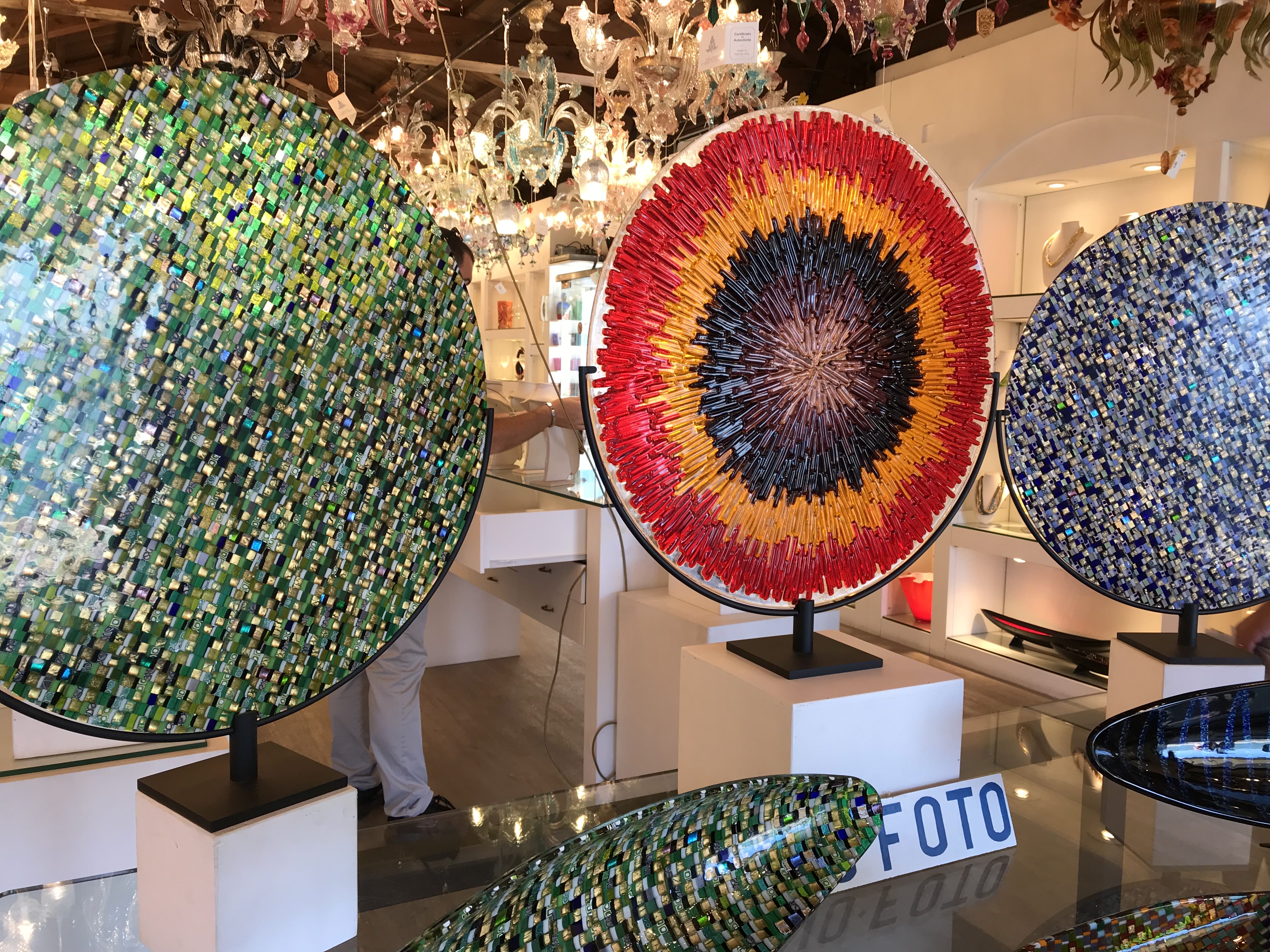
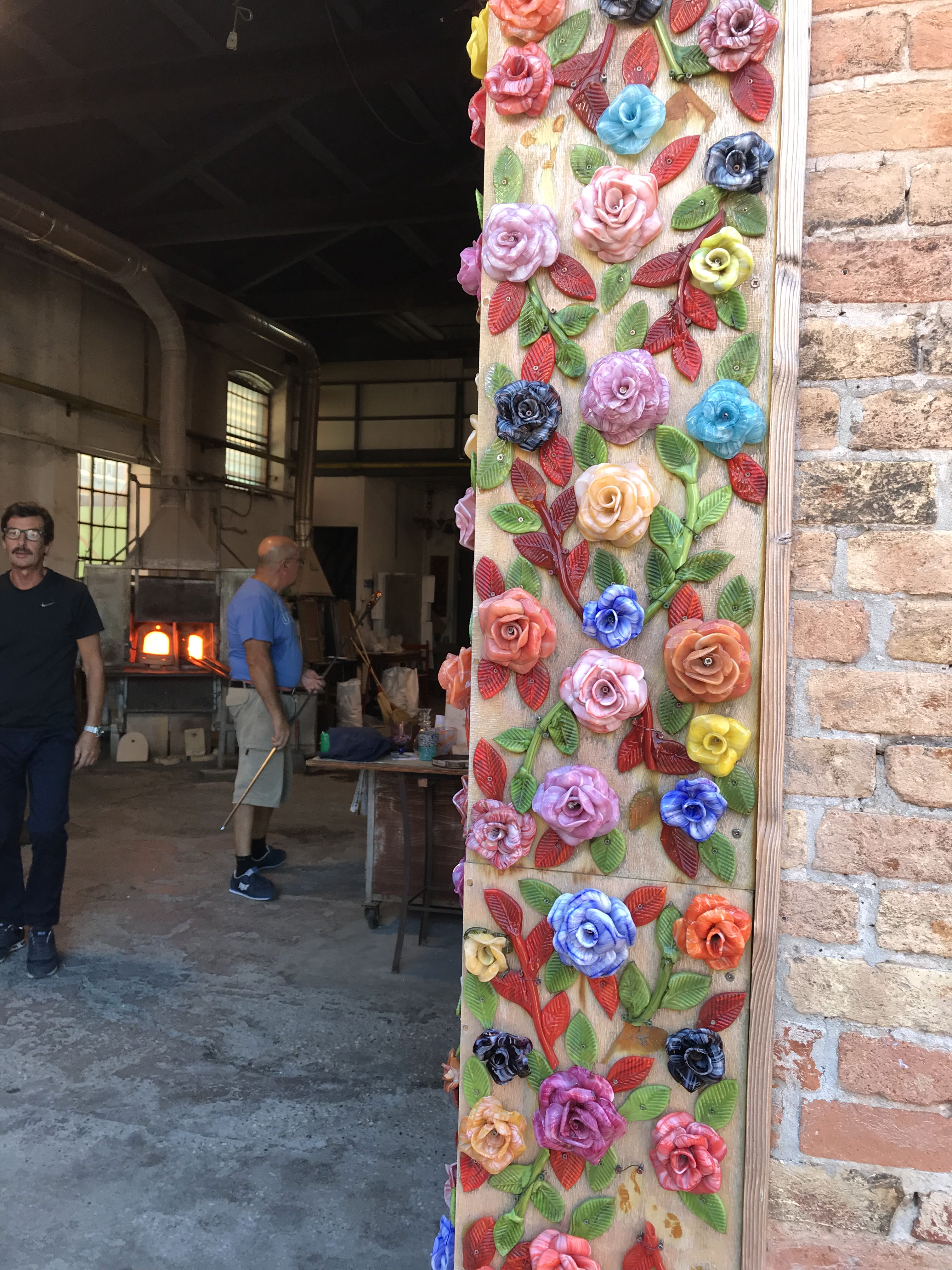
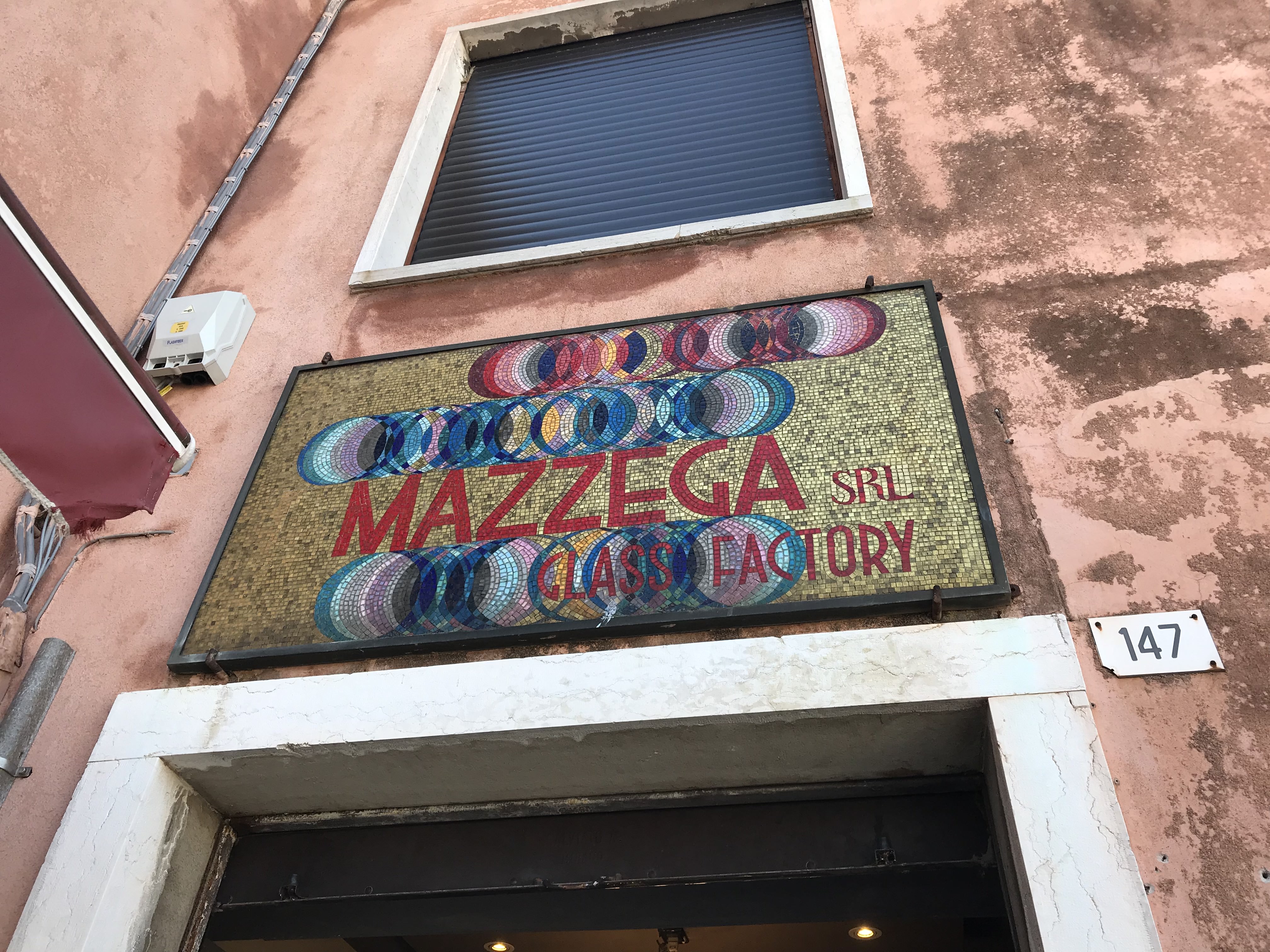
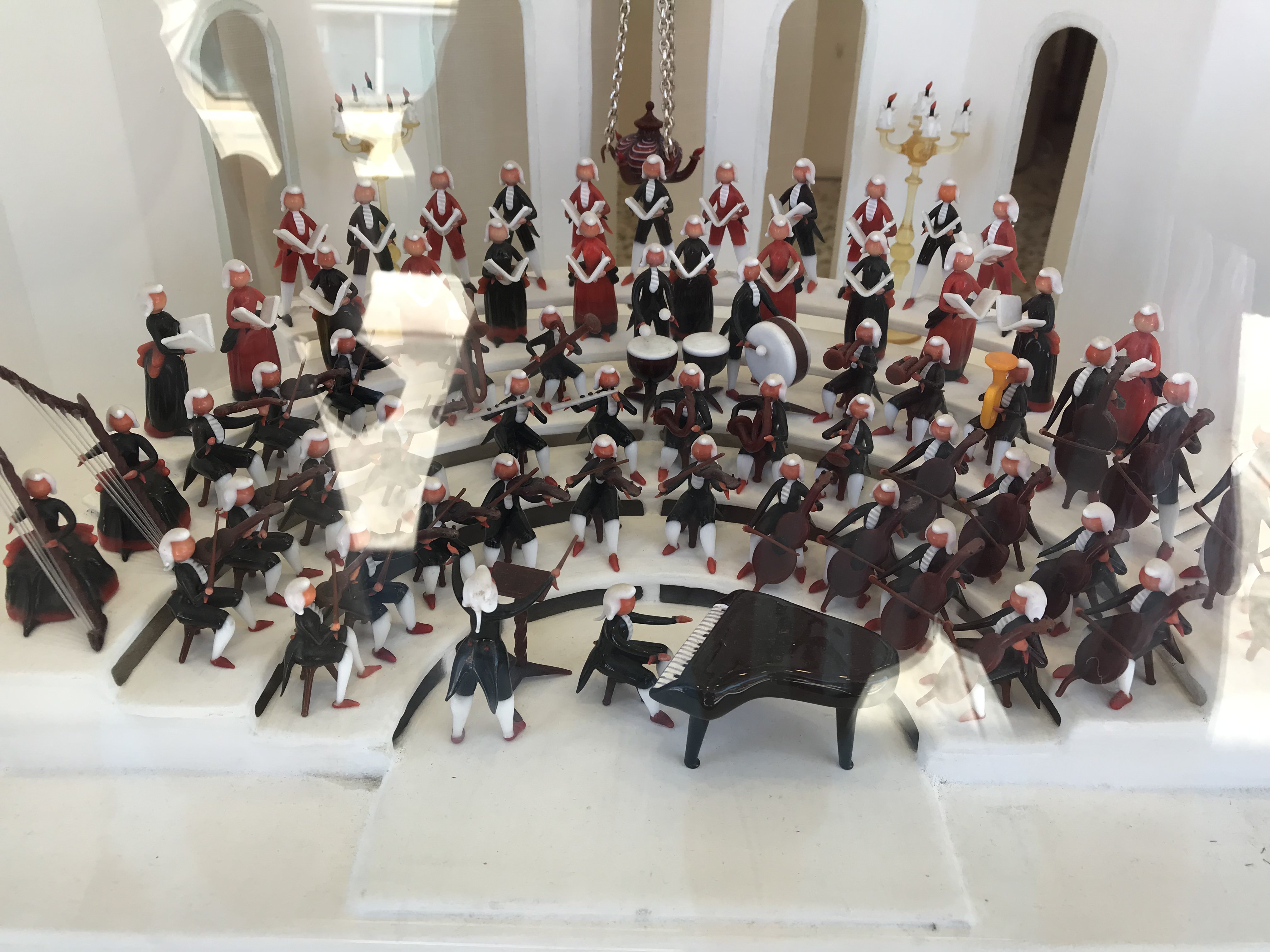
There’s no formal schooling or certificate, instead you must be recognized by other maestro’s (glass master), of which there are 60 on Murano. It can take 10-20 years to reach this status.
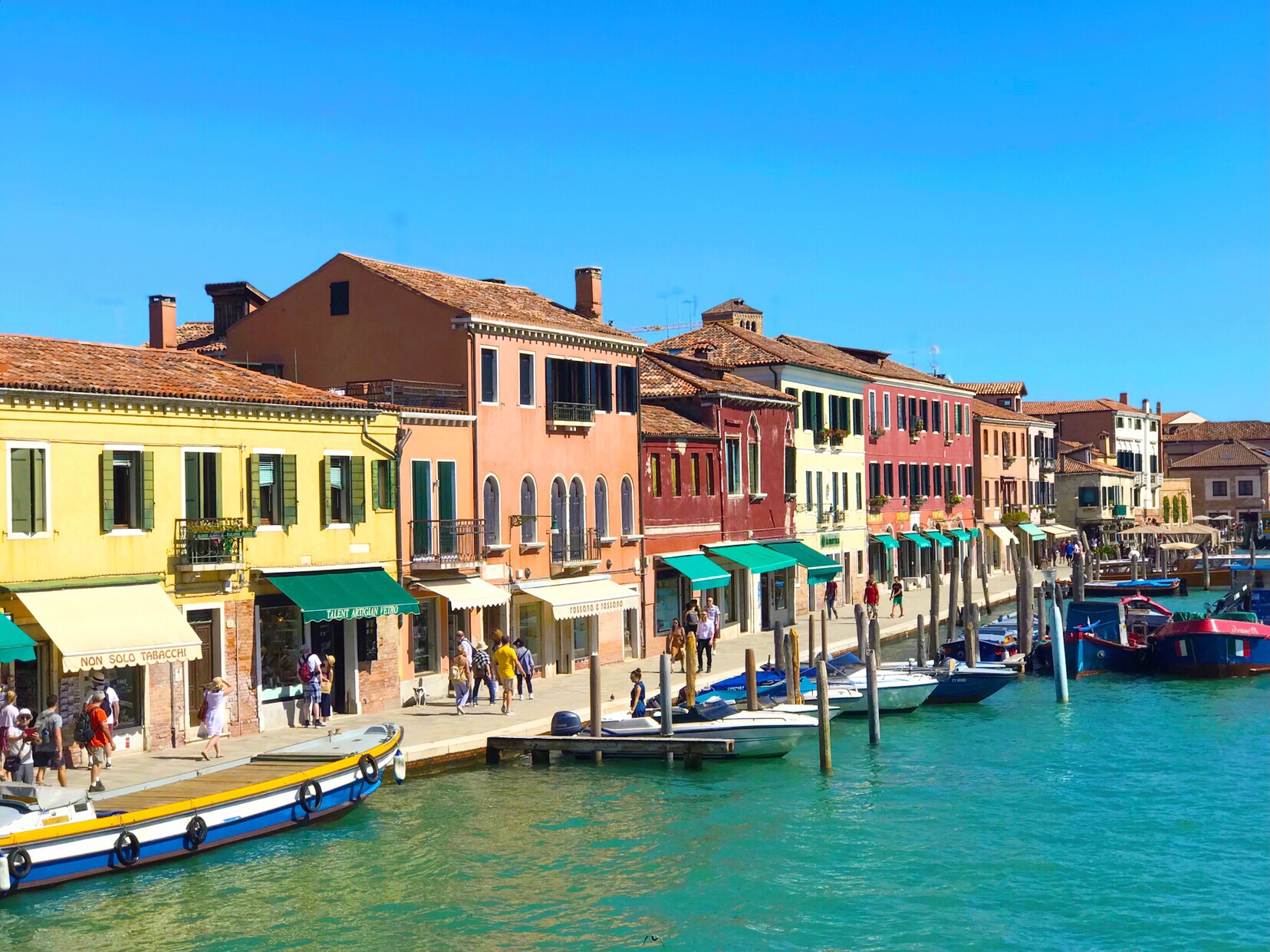
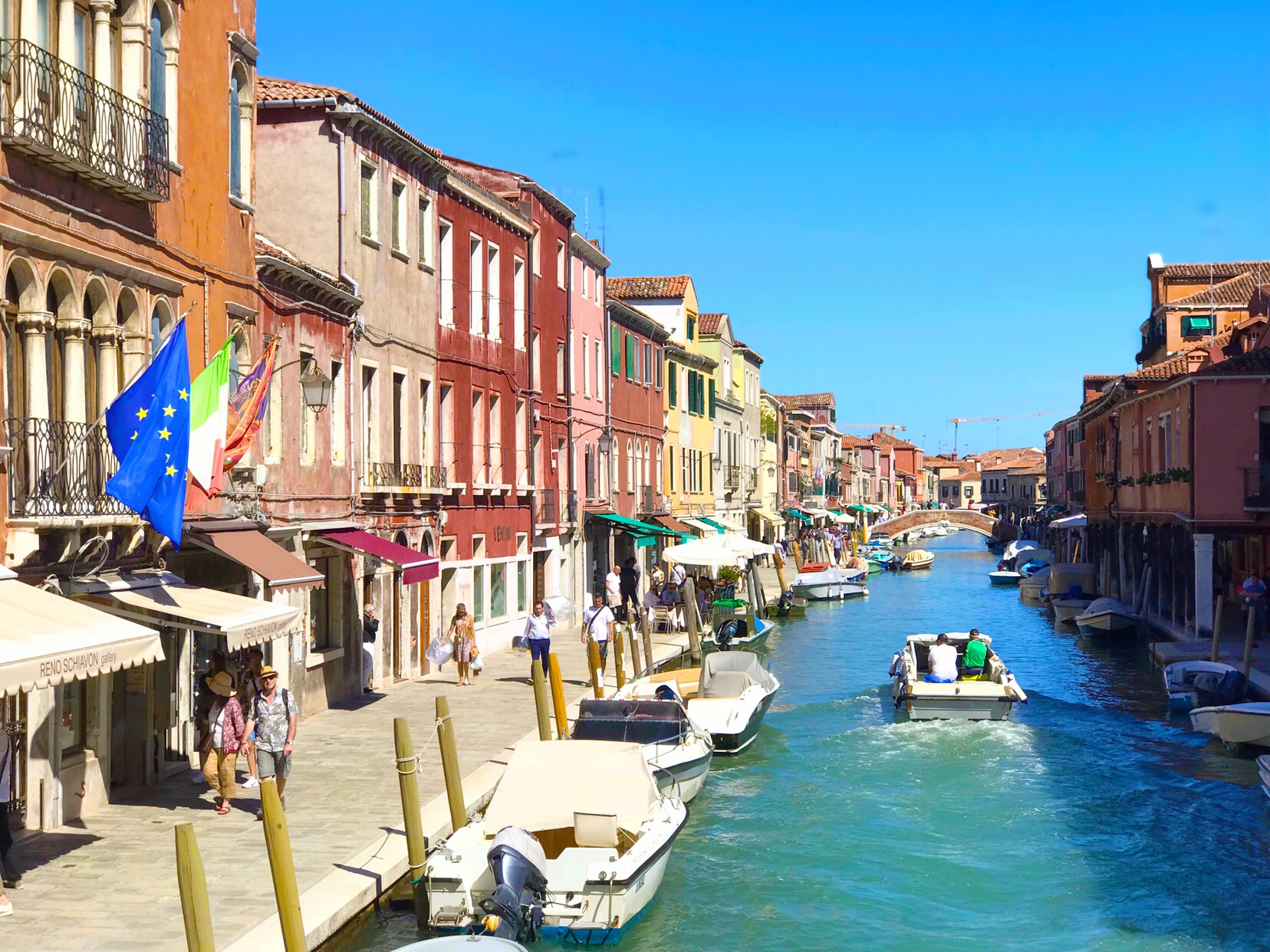
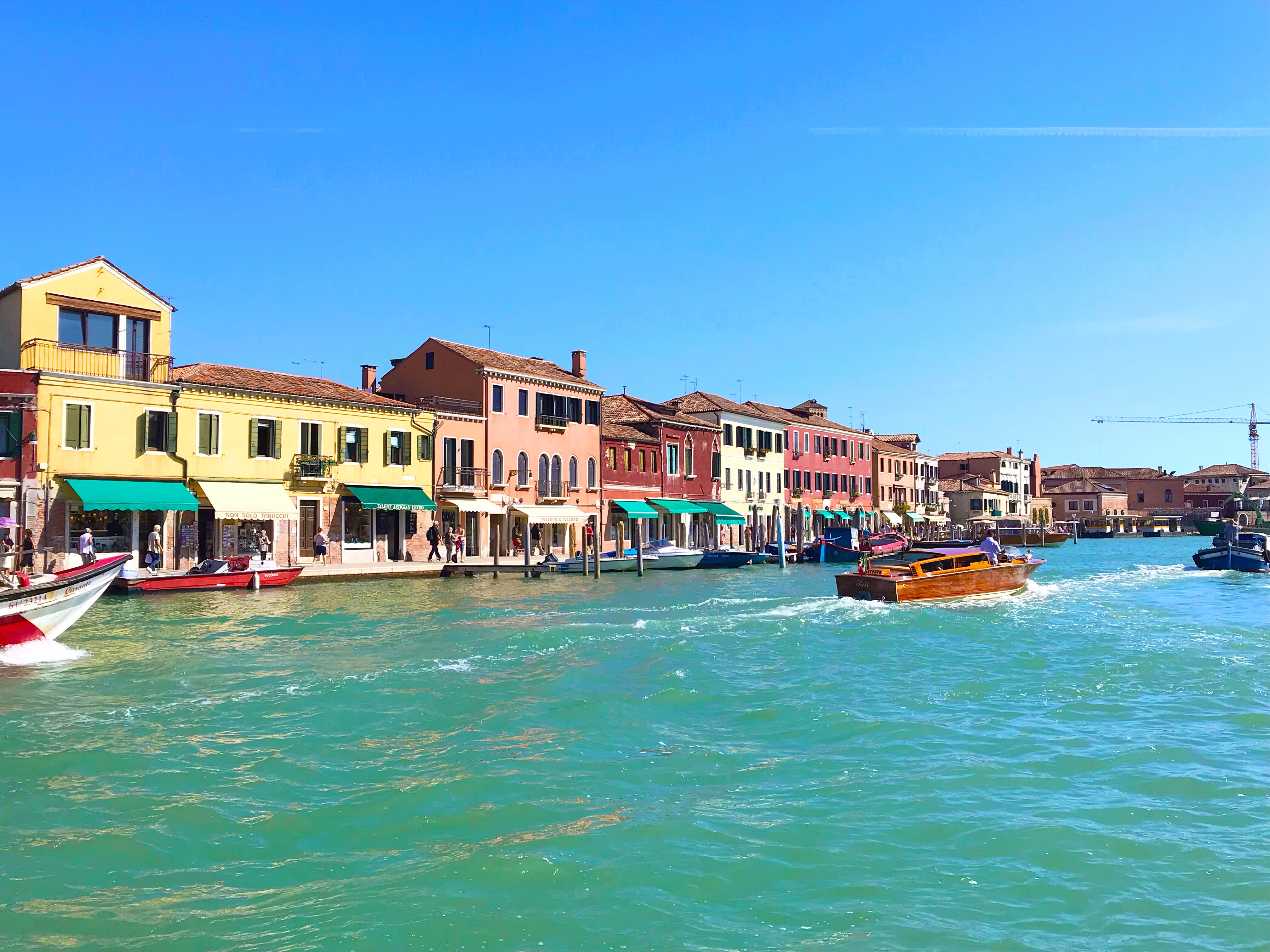
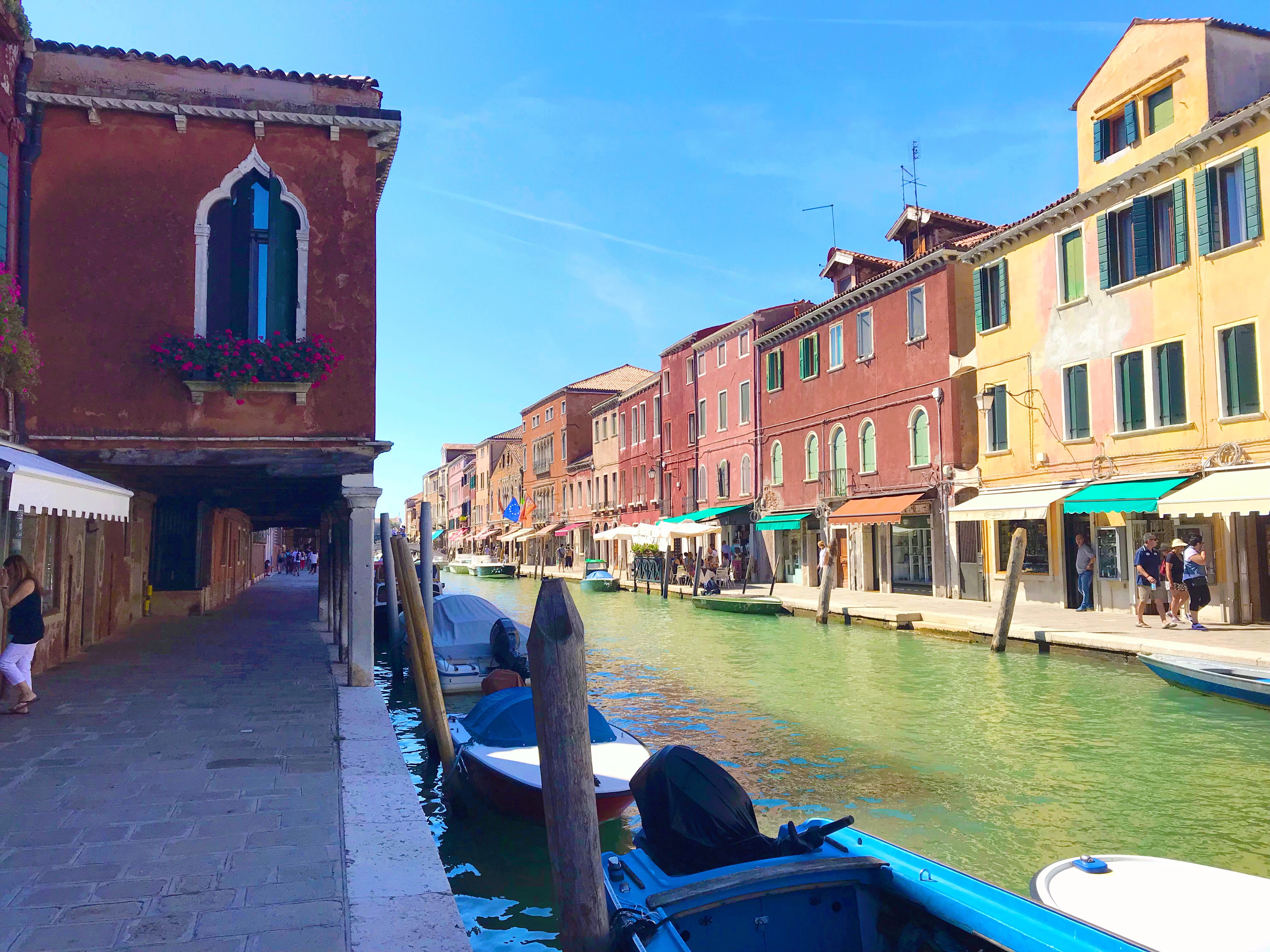
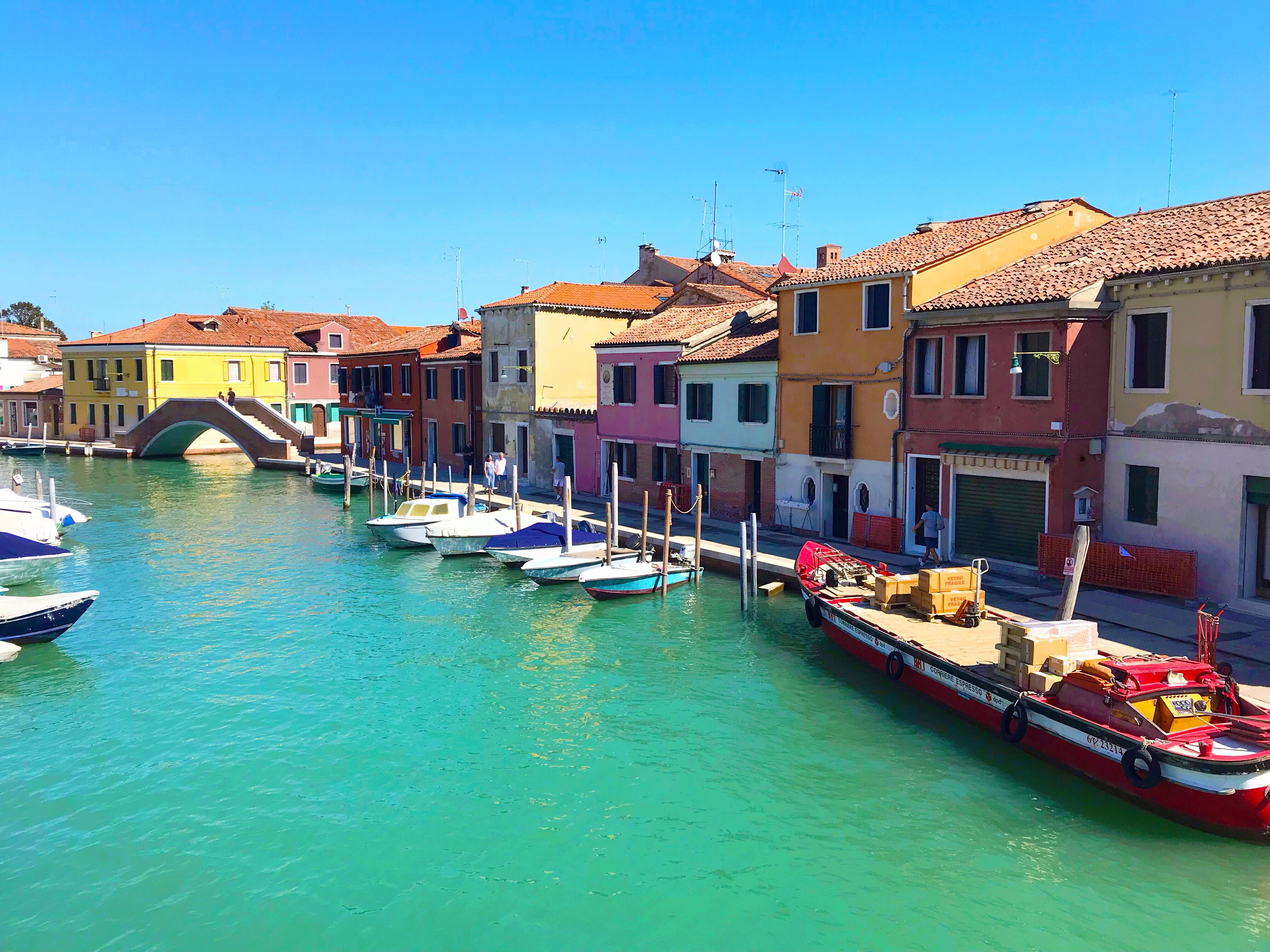
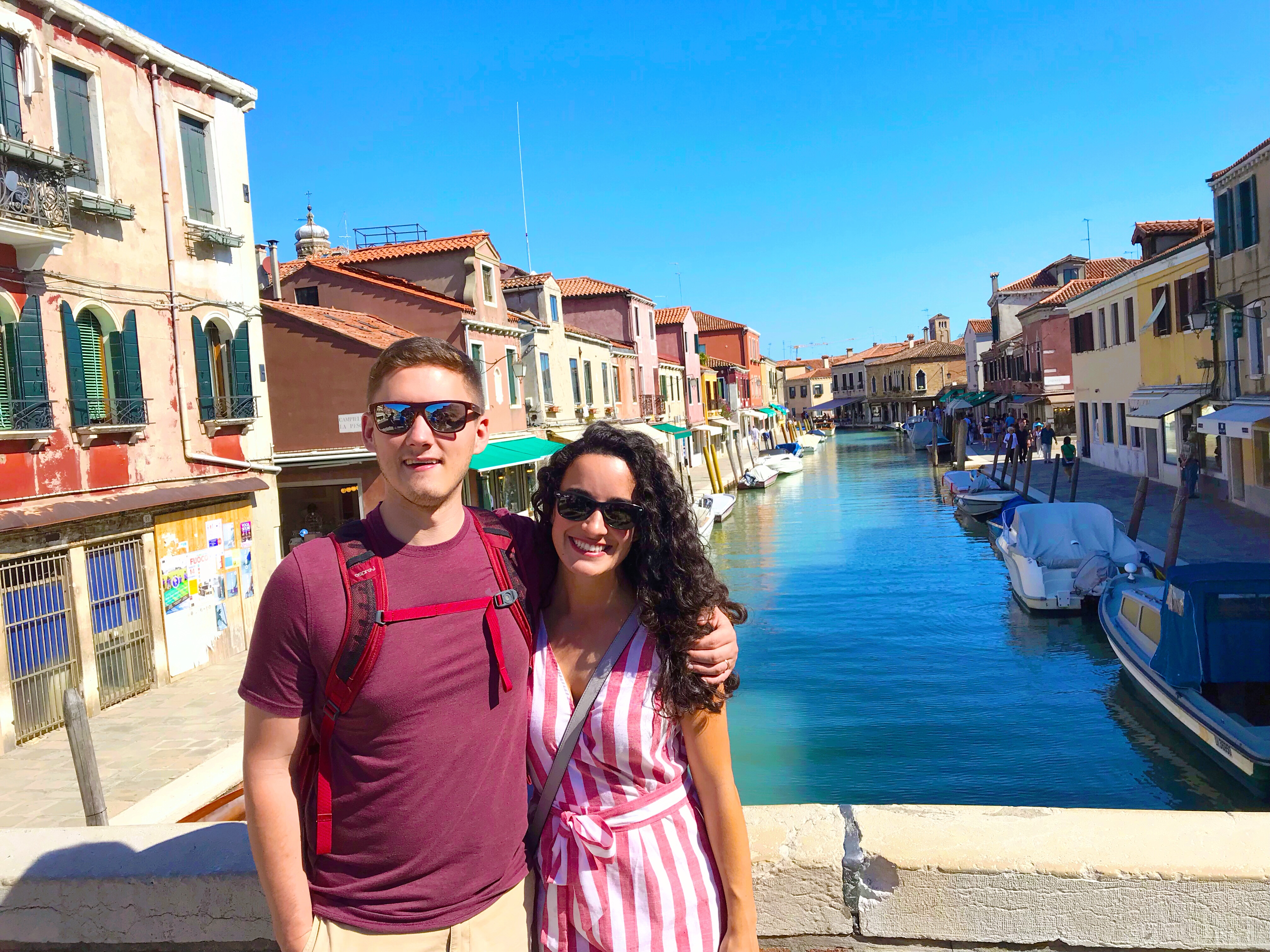
Anyone who knows me knows that I LOVE colors. One of my favorite parts of Murano was strolling around, looking at the bright and bold colors of the buildings. It was gorgeous!
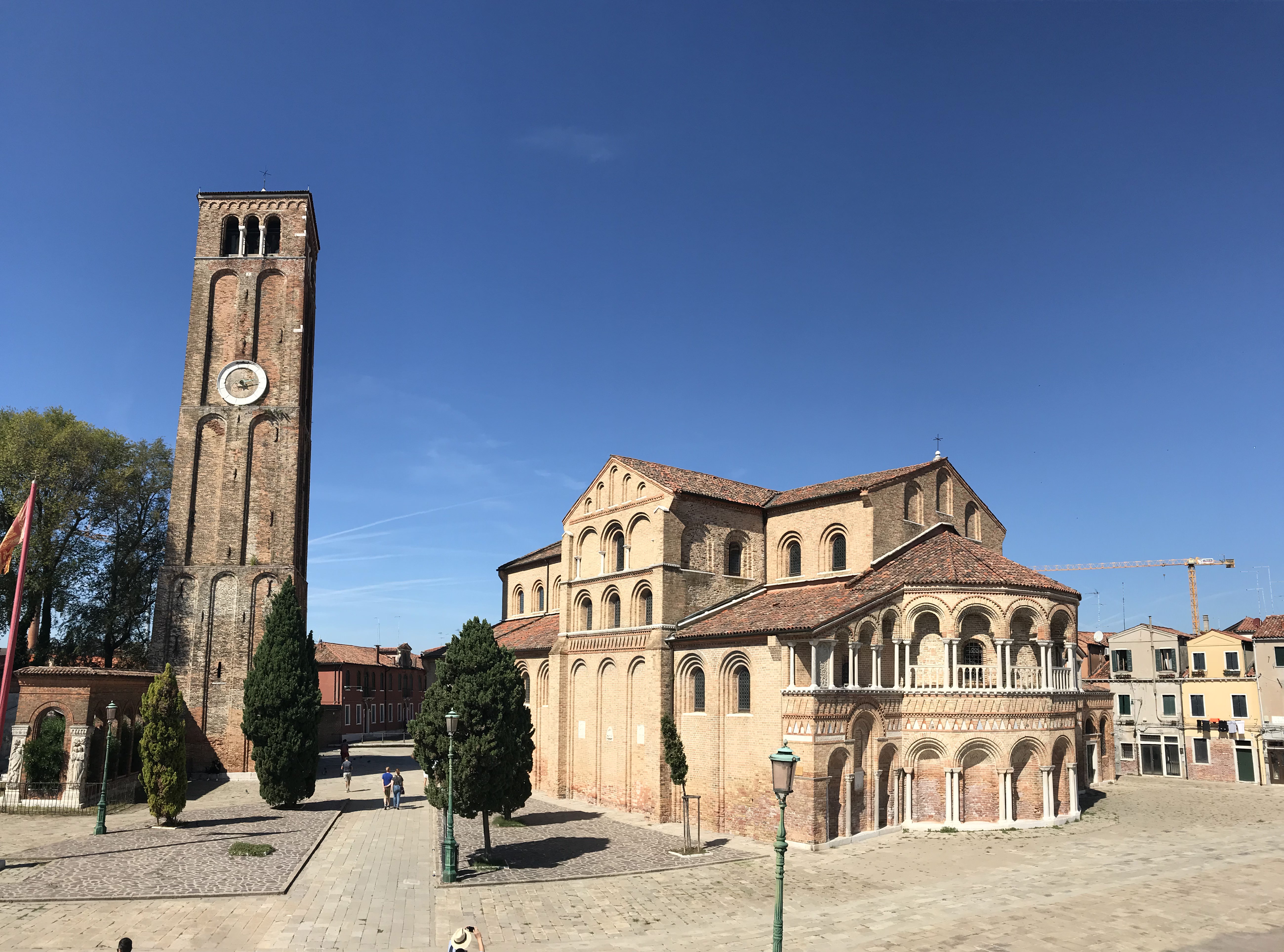
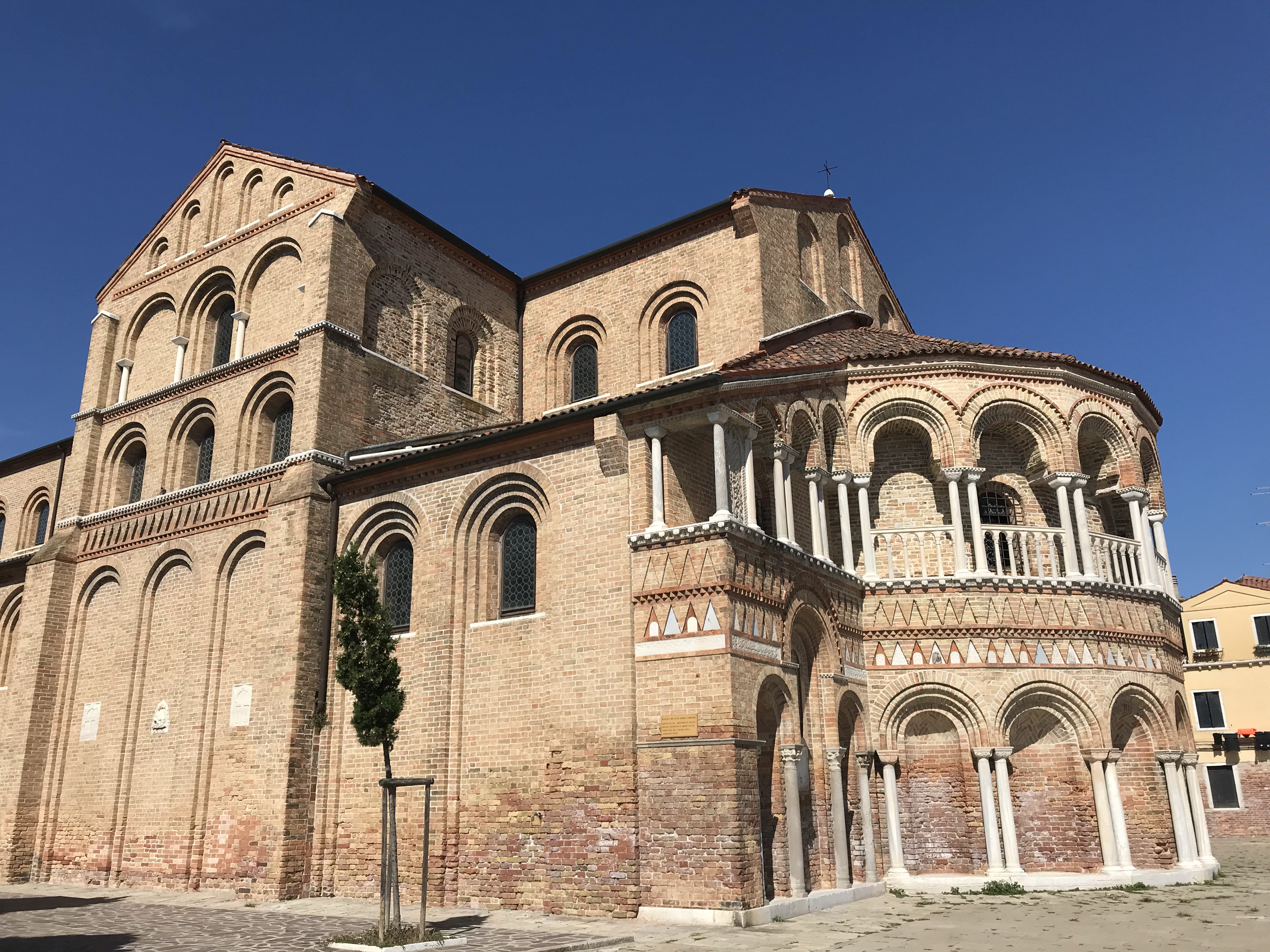
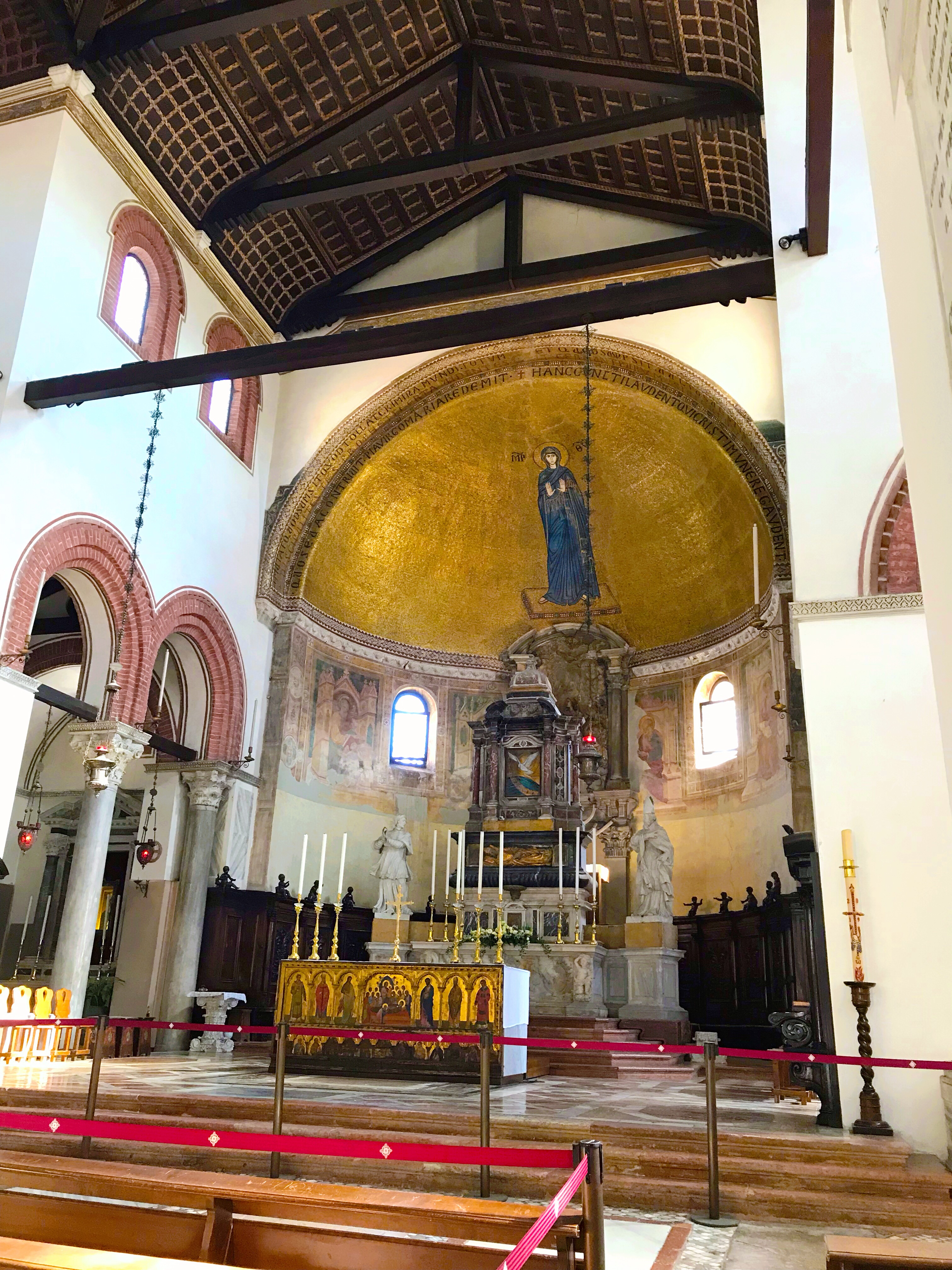
Basilica dei Santi Maria e Donato
With its Byzantine mosaic floor from 1140, the relics of St. Donato, and the supposed giant bones from a slain dragon, the Basilica has been rebuilt a few times, and is glorious to see in person.
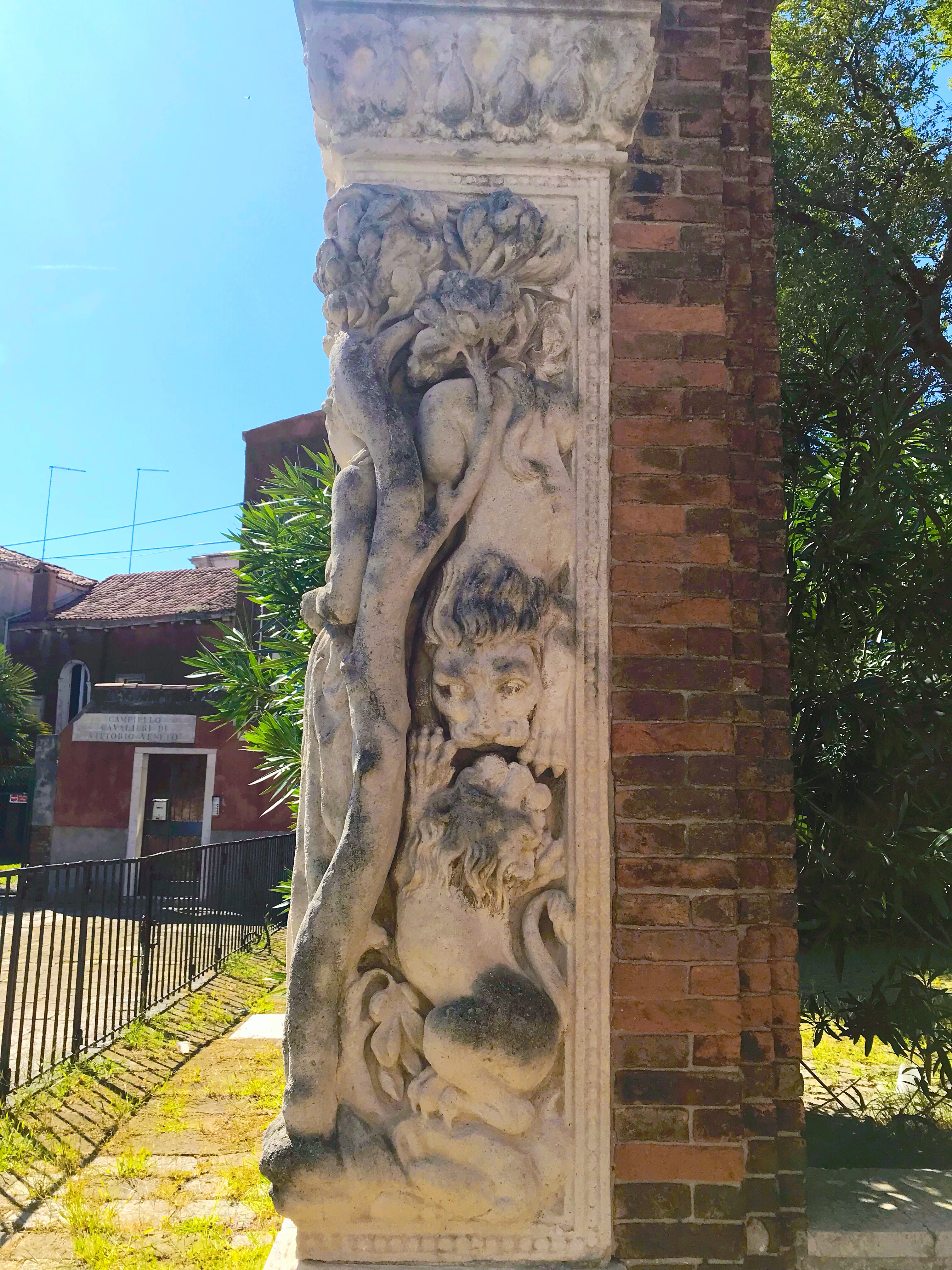
Cimitero di San Michele
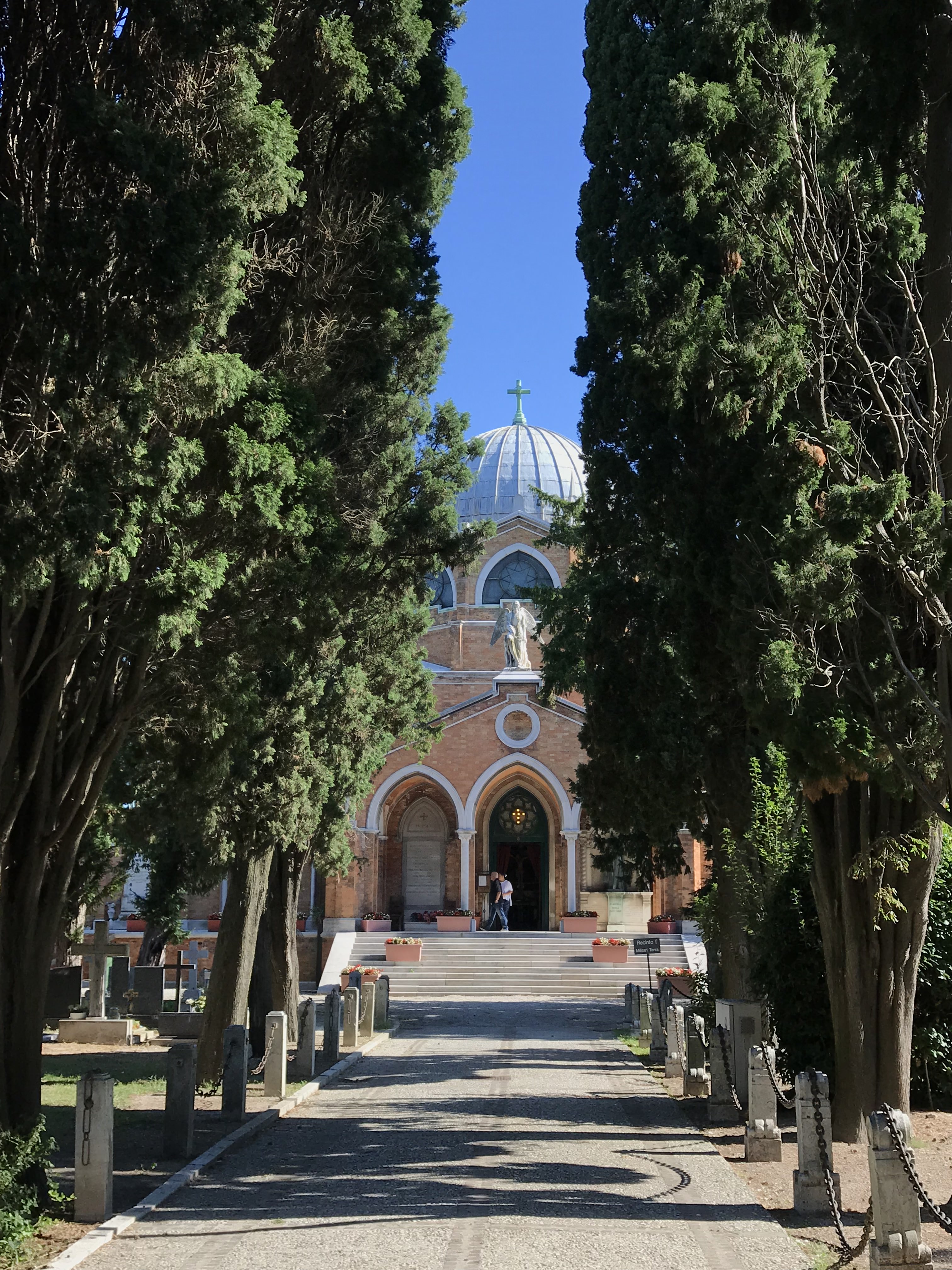
On our ferry ride back to Venice, we stopped at Cimitero di San Michele.
In 1804 when Napoleon invaded Venice, he declared that it was unhygienic to bury people on the main island, and so the Saint Michele Cemetery was built… on stilts.
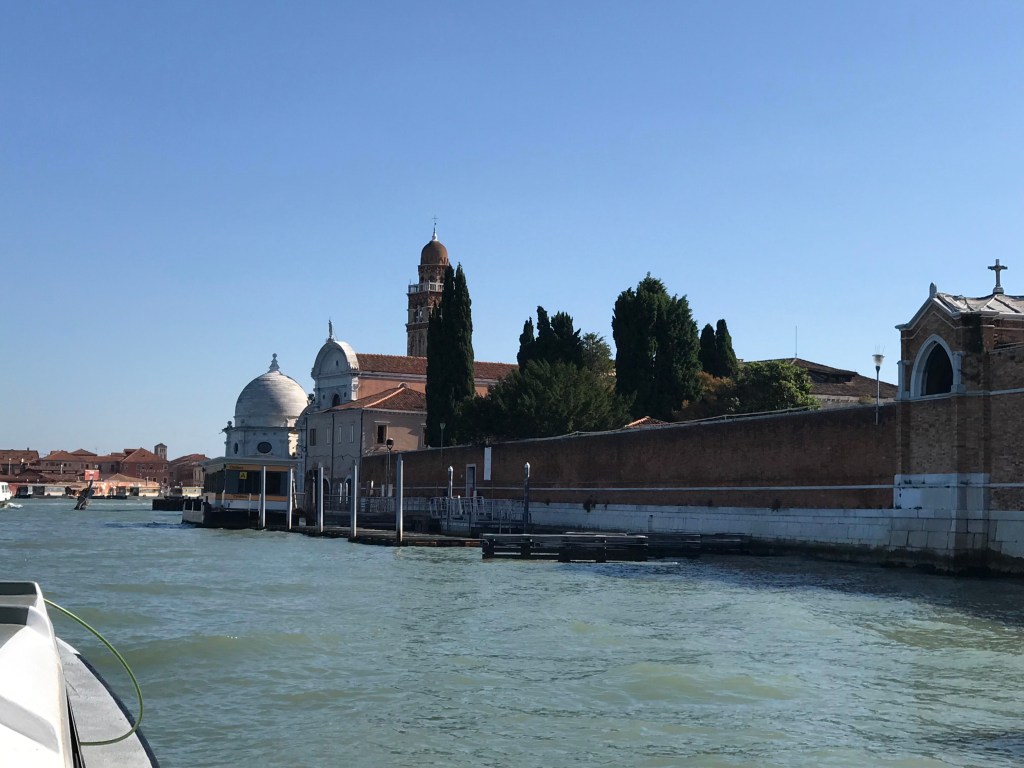
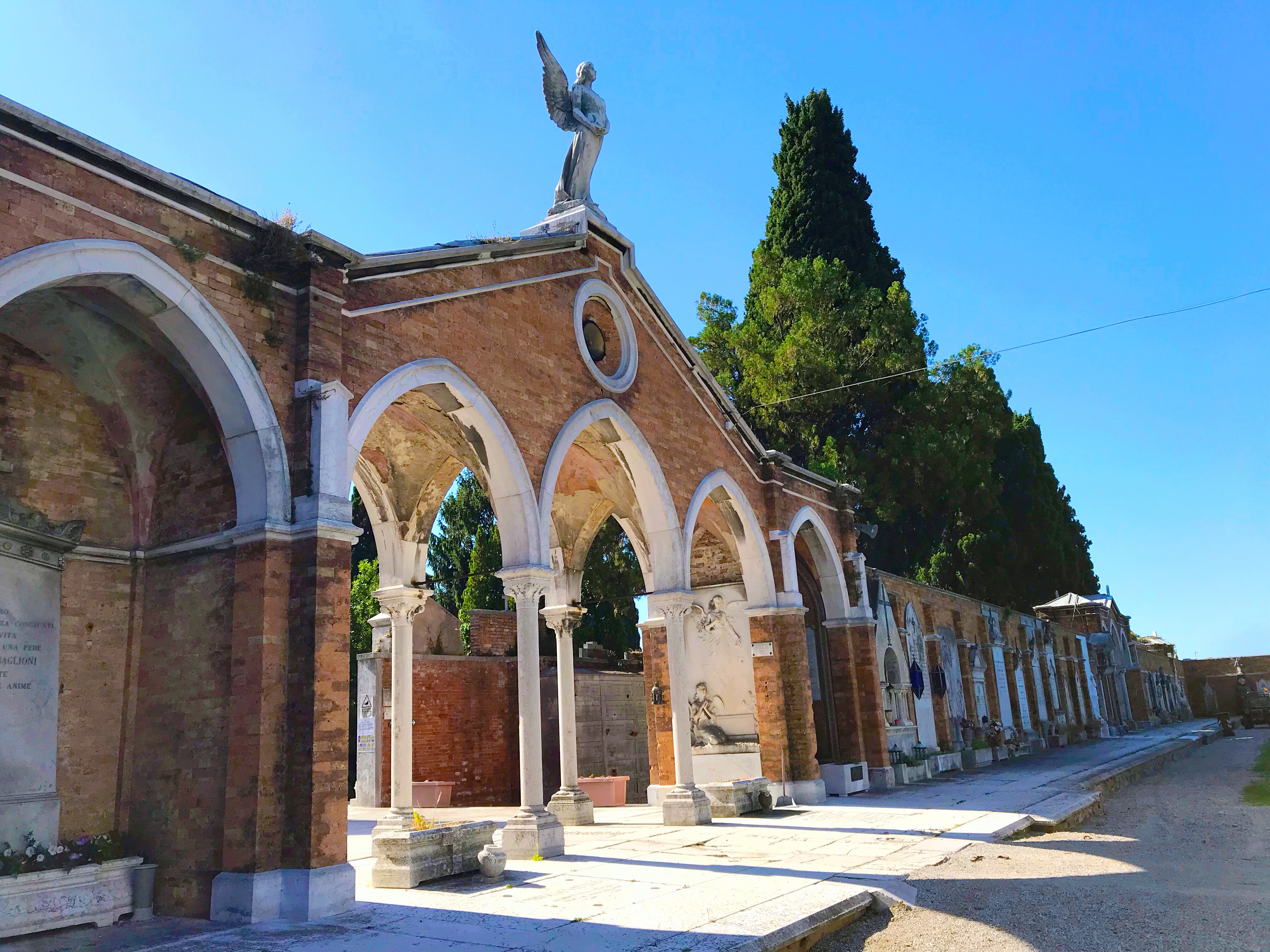
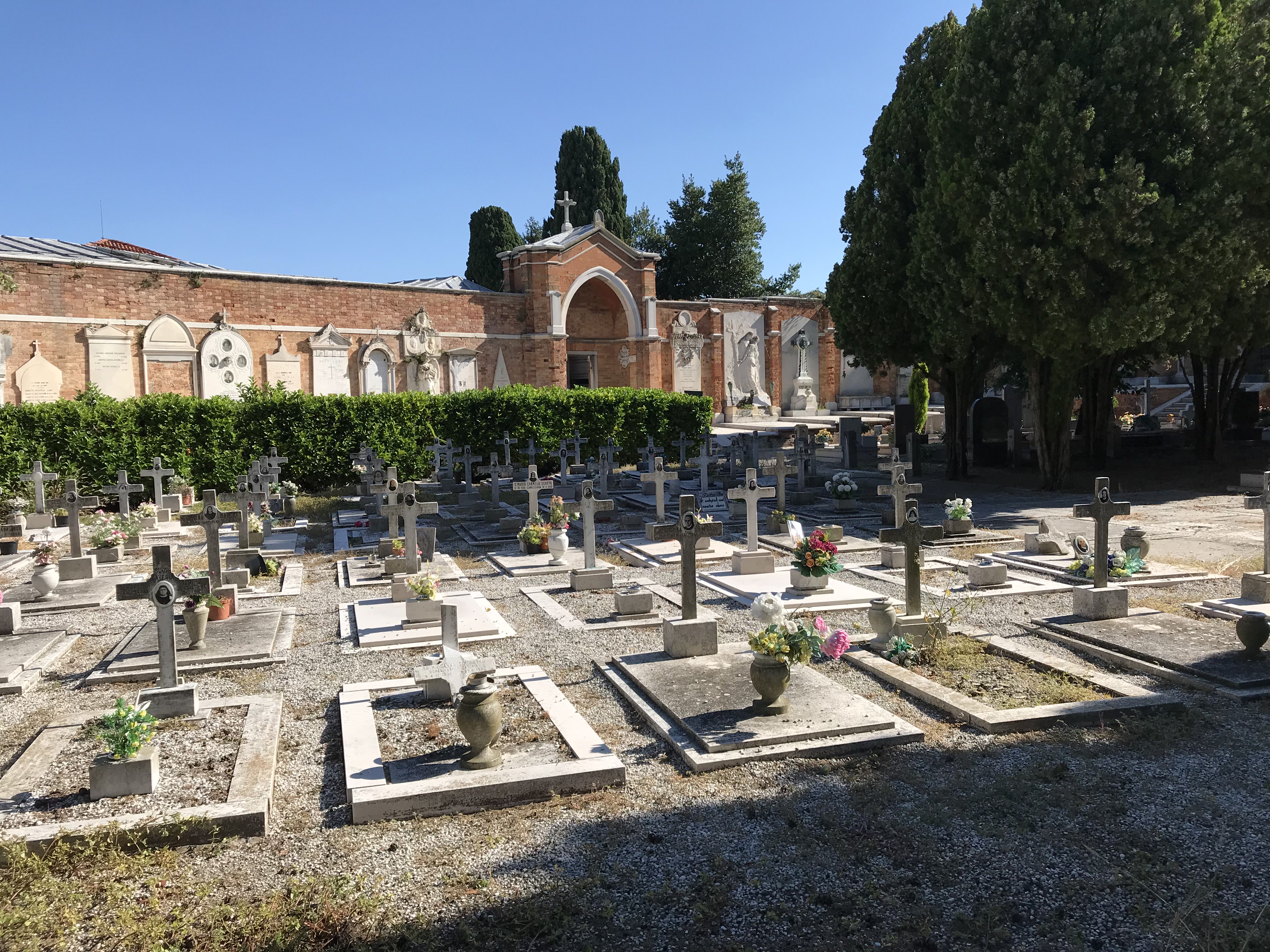
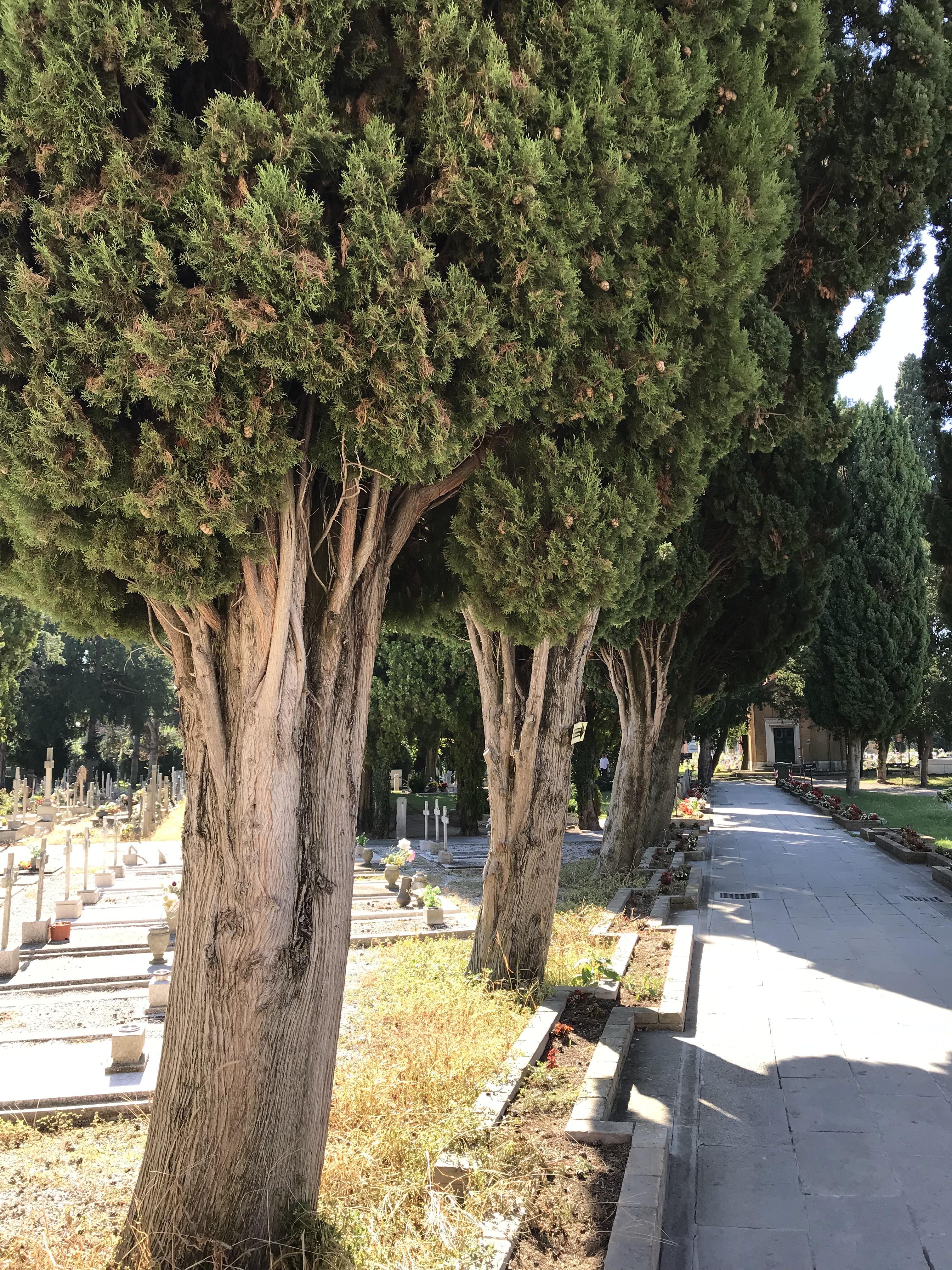
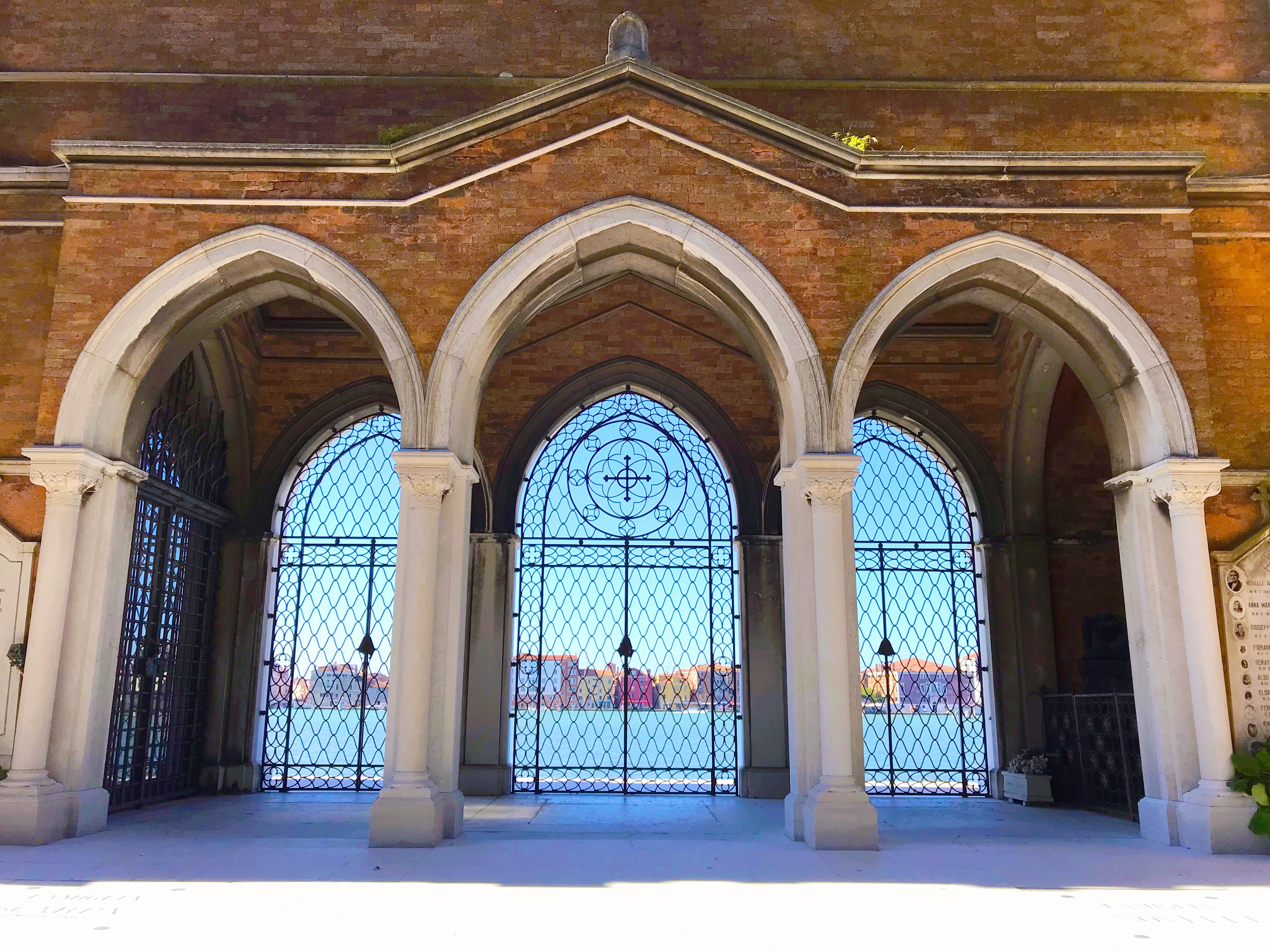
The cemetery was quiet – it didn’t seem as if many tourists stopped there. We only saw a handful of people while we walked the grounds, admiring the craftsmanship of the stone architecture.
 Walk the World with Schenkers & Manfriend