For the Manfriend’s Christmas present this year, I surprised him with a trip to Cuba over MLK Day! Here’s some helpful tips and tricks (as of January 2019) I’ve learned over the past two months in preparation for our trip to Cuba.
Packing Checklist
- Passport
- Visa or travel card
- 220 > 110 voltage converter
- CASH – as much as you think you’ll need
- Cell phone charger
- Camera
- toilet paper, baby wipes
- hand sanitizer
- sunscreen
- toiletries – soap/shampoo, toothpaste & tooth brush, medications, deodorant
Flights
American Airlines, JetBlue, Southwest, Delta, and United now fly to Cuba, most through Miami, but some fly direct from cities like Boston, NYC, Atlanta, Houston, etc.
Using the app, Hopper, I found reasonable flights for under $230 round trip per person on American Airlines from Boston to Havana. There was a layover each way, but mostly to get our VISA/ travel card before entering Cuba.
Insurance
The Cuban Government requires all Americans enter Cuba with valid travel health insurance. Some airlines, like American, include it in the cost of your flight. Double check with the airline before you purchase your flights.
VISA & Travel Cards
To enter Cuba, US citizens have to meet one of 12 eligibility requirements.
Under President Obama, the 50 year embargo was loosened, allowing for easier access to the small island 70 miles off the coast of Florida.
However, the current administration has tightened access, so tourism to Cuba is harder, but not impossible.
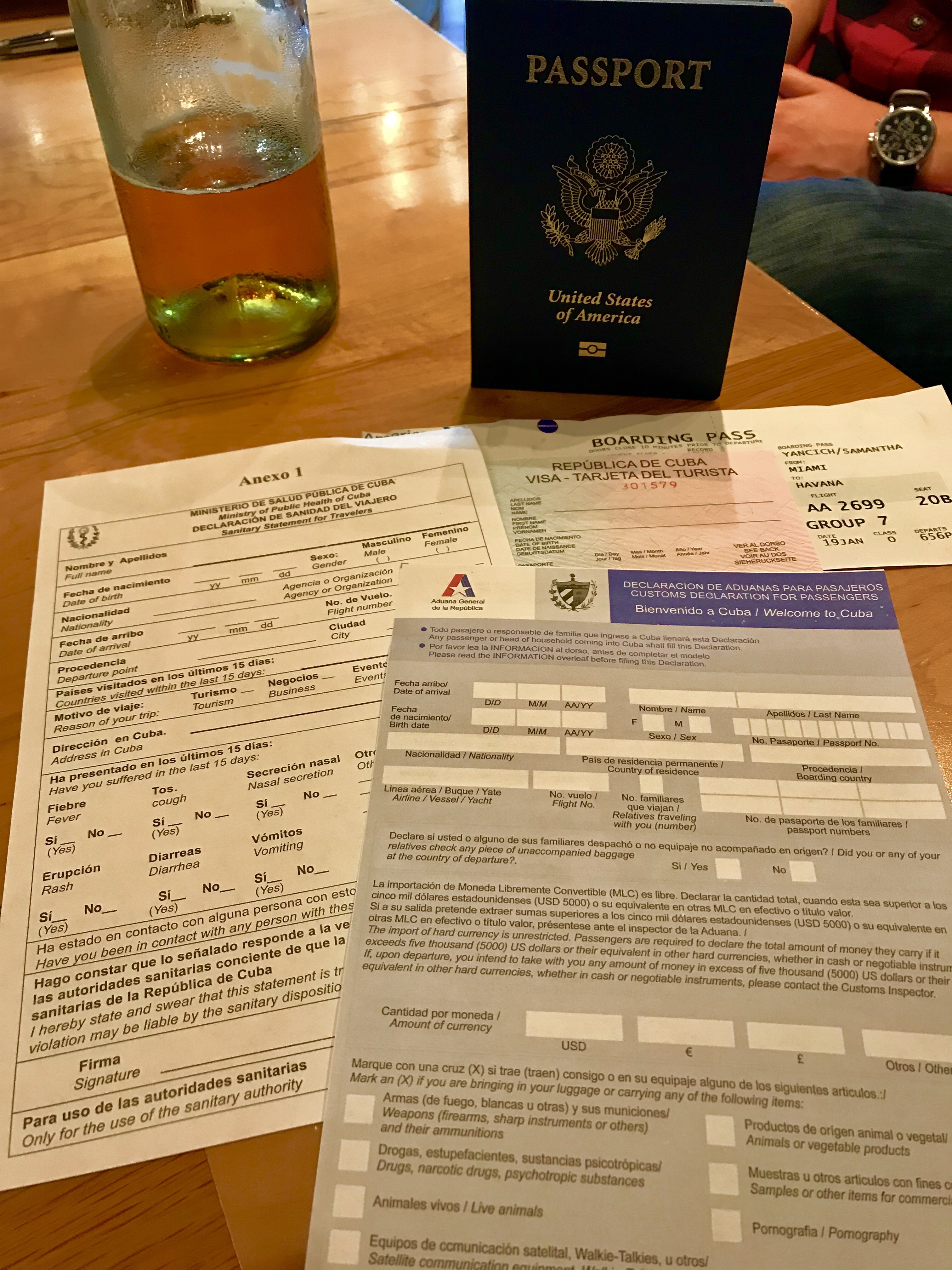
We entered the country under the designation “Support for the Cuban people,” and we’ll show evidence by doing things like bringing gifts for the Cuban people (toiletries, American-branded clothing and chocolate, feminine products, etc.), (and saving receipts from) purchasing dance lessons, hiring drivers for preplanned excursions, and spending money in their bars and paladares (family-owned and operates restaurants).
Money
US debit and credit cards won’t work in Cuba, and all money has to be converted once you arrive as US banks don’t have access to the CUC. Before you leave the US, withdraw the money you’ll need for your trip, and either at the airport (you’ll pay a higher conversion tax) or in town, convert your USD to CUC.
In Cuba, there’s two forms of currency used – CUC and CUP. CUC, the Cuban convertible currency, is used only by tourists, while CUP is the Cuban peso used by locals. Locals accept both forms for payment.
Accommodations
The US Federal Government still has many restrictions on entering Cuba and where you can spend your money on while you’re there.
One restriction requires that you not spend money at any company run by the Cuban government, and this means American citizens cannot stay in most hotels in Cuba.
Still today, most travelers enter Cuba via a cruise ship, but for those flying to the island, I’d suggest looking at Airbnb’s.
Airbnb is cheap in Havana – I found a nice place in Old Havana for $30 USD per night. There were more luxurious places, most maxing out at $130 USD per night, but you can easily find a nice place for little money.
When you look at Airbnb’s, make sure to find a place that explicitly says they provide hot and cold water. Water gets shut off at night in Havana, and most places only provide cold water.
Also, it’s rare to find an Airbnb that has WiFi. Expect to be out of pocket while you’re in Cuba, and enjoy the freedom that being offline allows. A few Airbnb’s said they provide WiFi, but what they don’t explain is that you have to buy a WiFi card at a local store to access it.
Food & Drink in Cuba
When Chris and I travel, we try to do it on the cheap. This means we bring granola bars and reusable water bottles with us so we don’t need to spend money every morning on breakfast at a restaurant. We’ve found that neither of us mind grabbing a granola bar and running out the door to start the days adventure, and we’d rather spend our money on dinner, art made by locals, and experiences.
While you can’t stay in a hotel, you can eat in their restaurants, but you’d be doing yourself a disservice. It’s expensive and to experience real authentic Cuban food, you must eat in paladars. Recently, the Cuban Government allowed individuals to open their homes as restaurants to tourists. Tourists pay more to subsidize locals, and the restaurants have many of the characteristics of the ever famous small restaurants people love in the North End – no more than 10 tables squished into a small room, intimate lighting and decor, owner chefs who rush around in a frenzy, and tremendous food.
So, we bought a box of Cliff protein bars to fuel us through the mornings and some other light snacks. You can’t bring produce or other perishable items into the country.
While drinking is a part of any cultural trip to Cuba, I’d strongly suggest you don’t drink the tap water and be wary of how bars and restaurants make their ice. Since we’re packing light and aren’t checking bags, in Miami we bought a good amount of water to sustain us the first day.
 Walk the World with Schenkers & Manfriend